


After more than a decade of military intervention in Yemen, Saudi Arabia now faces a crisis whose consequences have gone beyond the battlefields and affected the security of vital infrastructure, international credibility, and Mohammed bin Salman's economic programs. The recent attacks on King Khalid International Airport in Riyadh and the expansion of clashes on Yemen's fronts show that the security costs of Riyadh's regional policy continue to rise. These developments once again highlight a strategic reality: purchasing advanced weapons and relying on the support of foreign powers alone cannot create lasting security.
According to published reports, the attack on Saturday, October 10 on Riyadh International Airport left at least 12 dead and more than 300 wounded. Another attack on Sunday also left one dead and 11 wounded. Following these incidents, the airport's operations were disrupted and airlines canceled their flights. These Ansarullah attacks have raised questions about Saudi Arabia's defensive capability against missile and drone attacks.
The importance of these developments is not limited to the number of casualties or material damage. Riyadh Airport is one of Saudi Arabia's important communication hubs and the gateway for investors, international company executives, and foreign tourists into the country. Disruption in the operations of such a center can have consequences beyond the security domain and affect economic actors' confidence in the stability of the investment environment. This issue is doubly important for a country that, through the implementation of Vision 2030, seeks to reduce its dependence on oil revenues and become a regional hub for tourism, technology, and investment.
In recent years, Mohammed bin Salman has pursued major projects, including NEOM, with the aim of transforming Saudi Arabia's economic structure. However, the realization of such programs requires a stable environment, secure infrastructure, and investor confidence. When the capital's airport is targeted by attacks and airlines are forced to cancel their flights, the issue is not just the ability to counter a military attack; rather, the international credibility of a country that wants to present itself as a safe destination for business and tourism is also put to the test.
Foreign Support; Security Guarantee or Strategic Dependence?
One of the most important dimensions of Saudi Arabia's current crisis is the limitation of this country's reliance on foreign allies. Over the past decades, Riyadh has spent enormous sums on purchasing advanced weapons, air defense systems, and Western fighter jets. Despite this, recent attacks have shown that possessing advanced military equipment does not necessarily mean immunity against attacks. Defending a country's extensive infrastructure against combined missile and drone attacks requires operational readiness, sufficient stocks of interceptor missiles, an early warning network, and sustained counter-capability.
Under such circumstances, requesting help from allies to strengthen air defense can cover part of Saudi Arabia's immediate needs, but it will not be a substitute for a sustainable security strategy. There is a fundamental difference between selling weapons, exchanging intelligence, providing technical support, and direct entry into a military conflict. Western governments may support Saudi Arabia within the framework of their own interests, but this support does not necessarily mean accepting the costs of a long and high-risk confrontation with Ansarullah.
Washington's behavior also demonstrates the importance of this limitation. In 2025, after about 52 days of airstrikes against Ansarullah, the United States halted its operations with an agreement mediated by Oman. This agreement did not mean the destruction of Ansarullah's military capability, and the group's threats against shipping were not completely eliminated. Nevertheless, this experience showed that air superiority and firepower, without achieving specific political objectives, do not necessarily lead to a desirable strategic result.
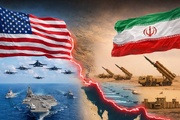
Now, too, America's direct entry into the Saudi-Ansarullah conflicts can create new costs. The expansion of military operations, the consumption of interceptor missile stockpiles, and the possibility of intensified threats against shipping routes complicate Washington's calculations. Especially since regional developments and the continuation of the crisis between Iran and America have imposed additional pressure on Washington's military resources and strategic decision-making. Therefore, Riyadh cannot consider foreign support as a definitive guarantee for preventing attacks or winning a long confrontation.
The Return of the Costs of Intervention in Yemen
The root of Saudi Arabia's current deadlock must be sought in a policy that was pursued from 2015 with the aim of changing the balance of power in Yemen. The military intervention of the Saudi-led coalition and the participation of the UAE not only did not lead to the removal of Ansarullah from Yemen's political and military equations, but over the years created extensive human, economic, and security costs. Airstrikes, restrictions on the entry of goods, and the difficulty of people's access to food, medicine, and medical services have imposed heavy pressure on Yemeni society.
Now, with the renewed intensification of clashes, part of the consequences of this policy has returned inside Saudi Arabia. Developments on various Yemeni fronts, including around Taiz and the Red Sea coasts, have gained greater strategic importance. At the same time, the situation in the coastal areas and the vicinity of Bab al-Mandab can complicate Riyadh's security calculations. Of course, the control status of these areas on the battlefield is variable, and an accurate assessment requires reliable and up-to-date information.
Bab al-Mandab is one of the important passages of global trade and energy transfer. Any intensification of conflict in this region can increase maritime transportation costs and affect the security of trade routes. From this perspective, the Yemen crisis is no longer merely an internal matter or a dispute between Riyadh and Ansarullah, but has become linked to the security of the Red Sea, international trade, and the interests of regional and transregional powers.
From a political perspective as well, current developments show that military pressure alone cannot eliminate the will of an actor with deep roots in Yemen's internal equations. Over the past years, Ansarullah has been able to maintain its political and military structure despite extensive attacks and economic and military pressures, and to impose costs on its regional rivals. This reality does not necessarily mean the absolute superiority of this group or the end of Saudi Arabia's military capability; rather, it shows that achieving political objectives through the military path faces serious limitations.
The Way Out of the Deadlock
Saudi Arabia now faces two simultaneous pressures: on the one hand, the necessity of defending vital infrastructure and reducing vulnerability to attacks; on the other hand, the increasing costs of continuing intervention in Yemen and the difficulty of achieving a sustainable political result. The continuation of the cycle of attack and response may expand the scope of damages, threaten the security of maritime routes, and spend more resources on military costs instead of economic development.
The way out of this situation is not merely increasing weapons purchases or pinning hopes on the direct entry of foreign powers. Riyadh must accept that sustainable security on its southern borders will not be achievable without taking into account Yemen's political and social realities. Stopping attacks, reducing humanitarian restrictions, moving toward an inclusive political agreement, and accepting the determining role of Yemenis in determining their country's future can provide the ground for reducing tension.
The experience of more than a decade of intervention in Yemen has a strategic lesson for Saudi Arabia and other countries in the region: military power and foreign support cannot substitute for understanding the realities on the ground and a political settlement of differences. If Riyadh continues to tie its security to weapons purchases and the promises of foreign allies and refrains from reviewing its regional policy, the possibility of repeating costly crises will remain. Ultimately, relying on foreign powers without creating sustainable mechanisms for resolving regional disputes is, more than a guarantee of security, a kind of leaning on the wind.
MNA














Your Comment